Create an Entryway Drop Zone Without Buying a Console
Our guides are independently written. Some shopping links may earn us a commission when identified as affiliate links, at no extra cost to you. Read our disclosure.
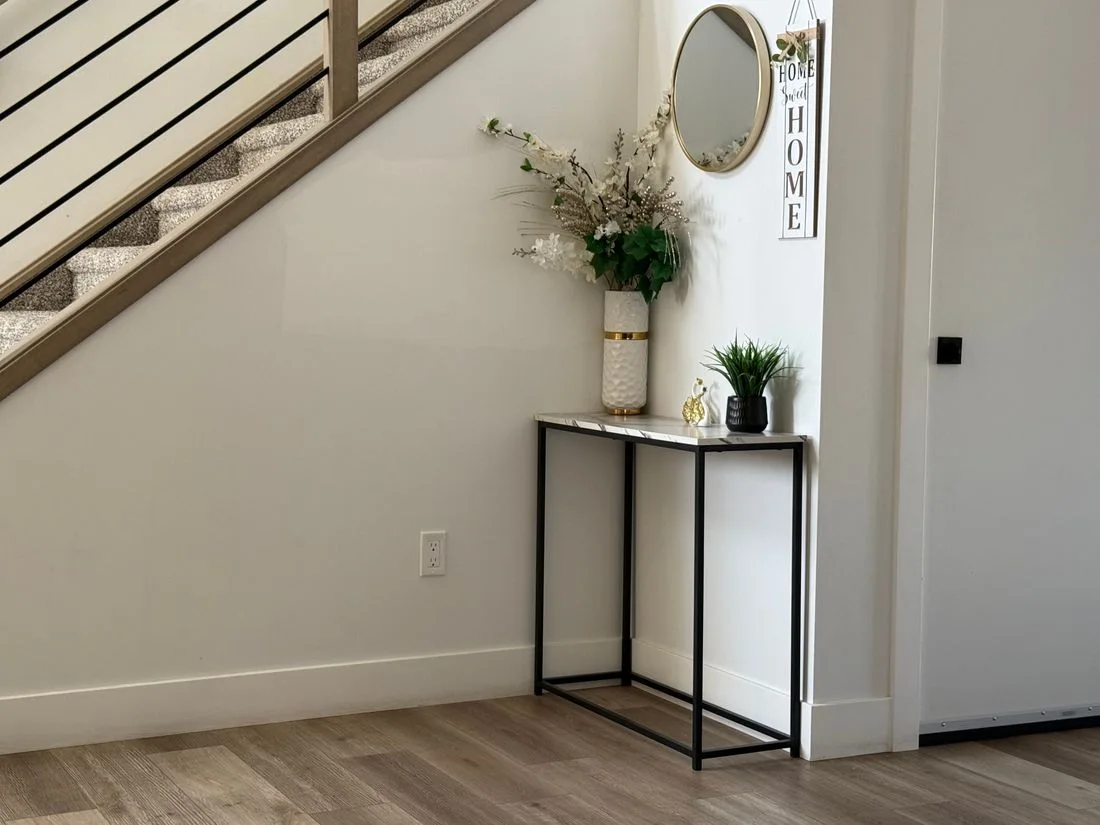
An entryway becomes cluttered because several jobs happen in the same few steps. You put down a bag, remove shoes, search for somewhere to place keys and remember a piece of mail that needs attention. A decorative console can provide a surface, but a surface alone does not decide where those objects belong.
Before shopping, watch the route from the door for a few days. Where do bags land? Which shoes remain in use? Does mail need a temporary stop, or is the household simply storing it there indefinitely? Write down the repeating objects rather than planning around an idealized photograph of an empty hallway.
Give the essentials a landing place
A small tray can hold keys and a transit pass. Use a dish you already own before buying a matching organizer. The important feature is location: put it where your hand naturally reaches after unlocking the door. A lovely tray several steps away may remain empty while the nearest counter fills up.
For bags, choose between a hook, a shelf or a designated floor basket based on the bag’s shape and weight. Check the manufacturer’s mounting guidance and the wall surface before installing anything. A heavy work bag should not hang from an improvised adhesive hook simply because the packaging looks tidy.
If drilling is unsuitable for your home, consider an existing chair or a freestanding stand that fits without narrowing the walking route. Measure the space with the door fully open. An organizer that blocks entry turns a storage problem into a daily obstacle.
Limit the shoe collection at the door
Decide how many frequently worn pairs need to live in the entryway. Store occasional shoes elsewhere. In a shared household, allocating a small area to each person can make the boundary clearer than a general instruction to keep everything tidy.
A washable mat or shallow tray may help contain ordinary mess, but check its dimensions against the shoes. Some attractive trays are too short for larger sizes. Consider how you will clean underneath, especially if the area receives damp footwear. A storage bench provides seating and capacity, yet only earns its footprint if both functions are useful.
Create an exit lane for incoming paper
Mail needs a next step. Put material that requires action in one small folder or upright holder, and clear unwanted paper regularly according to your local recycling and privacy needs. Avoid making separate bins for every possible paper category unless someone is willing to maintain them.
Keep sensitive paperwork away from an area visible through the door or accessible to visitors. The entryway is convenient for remembering tasks, but it does not need to become the household filing cabinet. Move long-term records to the place where you actually manage them.
Shop for measurements, not matching sets
Measure height, width and depth before browsing. Include the clearance needed to lift a bag off a hook or slide a basket out. Then compare materials, cleaning needs and attachment methods. A coordinated set is optional; stable, useful pieces that fit are the priority.
Start with one missing function. If keys disappear, solve keys first. If shoes block the door, establish their area before adding a mirror or vase. Each successful change should reduce a daily action, not create another object to move while cleaning.
Try a ten-minute weekly reset
Return stray items to their actual rooms, remove unused shoes and prepare the bag you need next. Wipe the landing tray and check whether the system still matches your routine. A seasonal shift may mean adding an umbrella spot or moving a heavy coat elsewhere.
The entryway does not need to remain photograph-ready. It needs to make leaving and returning easier. Pair this approach with a calm Sunday reset and an edited summer work bag so the same objects have a clear home at both ends of the commute.
More considered choices, fewer impulse buys.
Read our editorial standards →